
You know what’s the weirdest thing? For three years, I thought Mount Kilimanjaro was the only peak in East Africa. Then a friend of mine, who had actually been there, laughed in my face and said, “Dude, you’re missing out on the real thrill.” That’s when I first started reading about africa mount kenyaa. And honestly? I felt like a complete idiot for ignoring it.
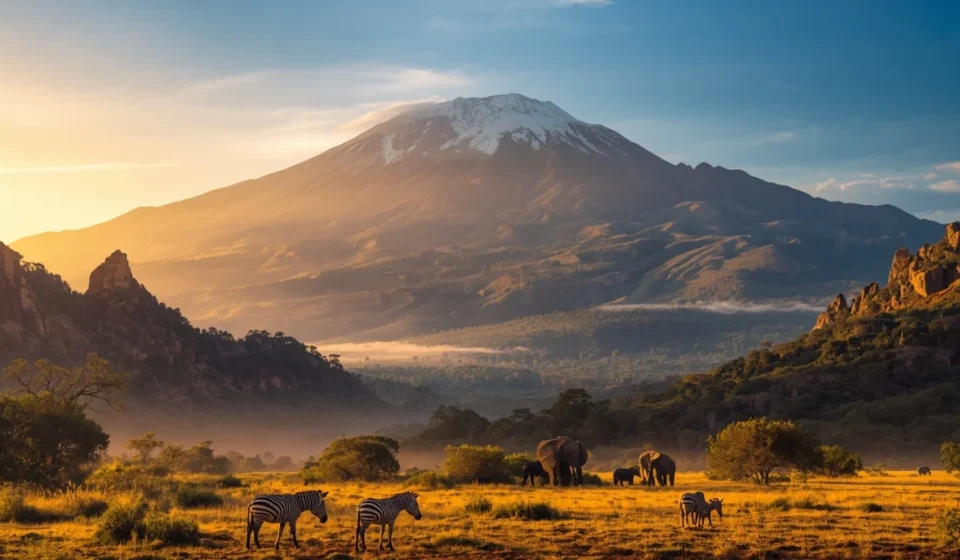
This majestic mountain sits right on the equator. Snow on the equator. Think about it. Africa’s Mount Kenya is the second highest mountain on the continent, but its identity is not limited to its height. It is a place of breathtaking beauty, thrilling adventure, and profound cultural significance. Although it is often overshadowed by its taller neighbors, Africa’s Mount Kenya has maintained its own unique story spanning millions of years. From the technical intricacies of its highest peaks to the rare wildlife that inhabits its slopes—there is much more to this mountain than meets the eye.
However, the real surprise is this—I’ve compiled eight incredible facts about africa mount kenyaa that will inspire you and deepen your fascination with this giant mountain in East Africa. Some of these facts really surprised me, and I think they’ll surprise you too.
1. africa mount kenyaa is a huge dormant volcano.
Rain. Ash. Lava. That’s how it all started. It’s hard to imagine this massive mountain as a fiery volcano, but africa mount kenyaa is exactly that. It’s an ancient extinct volcano that was formed by powerful eruptions millions of years ago.
The fiery origin of the mountain
The geological story of africa mount kenyaa began about 3 million years ago. During its active period, which lasted from about 3.1 to 2.6 million years ago, it is believed to have risen to an astonishing 6,500 meters. This made it even taller than it is today. The mountain was formed by the eruption of a large stratovolcano. Over time, volcanic ash and lava solidified to form the massive structure it is today.
I remember reading about it and thinking—wait a minute, am I standing on ancient lava? Experts believe the volcano is now extinct and will probably never erupt again. The central peaks, like Batian and Nelion, are made of the same crystalline rock that once covered the volcano’s mouth. This created a solid core that has withstood millions of years of erosion. Pretty cool, right?
2. It was once much taller than it is today.
Although Africa’s Mount Kenya currently stands at 5,199 meters, it was once a truly towering peak. Glacial processes have dramatically altered its shape. And when I say dramatically, I really mean it.
The power of ice and erosion
When the mountain was active, its estimated height was about 7,000 meters. That means it was higher than Mount Everest from base to summit! Over millions of years, massive glaciers have carved their way down the mountain. The erosion of these glaciers has eroded the shape of the mainland and deformed and removed rocks, soil, and other materials.
After three failed attempts to imagine its enormity, you begin to understand—this mighty force of nature is what created the jagged peaks and U-shaped valleys of today’s africa mount kenyaa. It really boggles my mind to imagine a mountain that tall. The fact that it still looks huge, despite its current height of 5,199 meters, is a testament to how vast it once was.
3. The peak has three main forms: Batian, Nelion, and Lenana.
When people talk about climbing africa mount kenyaa, they often have to clarify which peak they’re talking about. I made this mistake once—I told someone I was “climbing Mount Kenya” and they immediately started asking about my rock climbing experience. I said, “Um… I was planning to walk?”
The mountain is not a single point, but rather a complex collection of multiple peaks, with its three main peaks presenting completely different types of challenges from each other.
A mountain for all skill levels
The highest peak is Batian, which is 5,199 meters above sea level. It is a technical rock climb, requiring significant mountaineering skills. The second highest peak, Nelion, is 5,188 meters high and is also a challenging technical climb.
However, the third peak, Point Lenana, is at an altitude of 4,985 meters and is the most popular destination for trekkers. Reaching Point Lenana does not require special mountaineering skills, making it an achievable challenge for physically able hikers. This means that Africa’s Mount Kenya is suitable for everyone, from adventurous trekkers to experienced climbers.
My friend Dave—who had made fun of me on Kilimanjaro—had reached Point Lenana. He said it was the most physically demanding task of his life, but he didn’t need a rope or a harness. Just sheer courage, good boots, and a fierce determination.
4. Mount Kenya on the African continent is a UNESCO World Heritage Site.
In recognition of its outstanding universal value, Africa’s Mount Kenya was listed as a UNESCO World Heritage Site in 1997. This recognition highlights the mountain’s global importance, not only for its beauty, but also for its incredible biodiversity.
A biodiversity hotspot
The entire area of Mount Kenya National Park is recognized as a vast flora and fauna sanctuary. The mountain’s diverse ecosystem, which ranges from dense cloud forests to highland wetlands, provides habitat for many rare and endemic species.
Africa’s Mount Kenya is an essential resource for millions of people as a vital water source for Kenya. But—and this is the depressing part—the future of conservation of this precious site is a matter of “grave concern.” Threats like climate change and bushfires have made the work of the Kenya Wildlife Service and other agencies more important than ever.
My neighbor Tina actually visited the national park two years ago. She came back with pictures of these strange-looking trees and couldn’t stop talking about them for weeks. She kept saying, “You have to see it to believe it.” Honestly, looking at her pictures, I could see why.
5. The mountain is a sacred symbol for the local community
Beyond its physical appearance, Africa’s Mount Kenya has deep spiritual and cultural significance. For centuries, the Kikuyu people who live at the foot of the mountain have revered it as a sacred place. I learned this from a guidebook I bought at a secondhand shop in Nairobi—it cost about fifty cents and turned out to be one of the best purchases of my life.
White mountain
The Kikuyu people refer to africa mount kenyaa as “Kirinyaga”, meaning “Mountain of Whiteness”. This name refers to its snow-capped peaks. They believe that their supreme god, Ngai, resides at the top of the mountain.
The mountain is not just a physical landmark, but a place of traditional ceremonies and a symbol of their cultural identity. After Kenya’s independence in 1963, the mountain became a symbol of national independence and unity, when Munyo Kisoi bravely raised the Kenyan flag on its summit.
I can only imagine what that moment must have felt like—standing on top of africa mount kenyaa, knowing that you were planting your country’s flag on sacred ground. Just thinking about it makes me shiver.
6. Technically it is more difficult to climb than Kilimanjaro.
Although Africa’s Mount Kenya is shorter than Kilimanjaro, many climbers find it a more difficult challenge. Its terrain is complex and demands more than just endurance. My friend Sarah learned this the hard way—she had conquered Kilimanjaro and thought Africa’s Mount Kenya would be a piece of cake. Let me tell you: it wasn’t.
Terrain Challenge
The highest peaks, Batian and Nelion, require high-level rock climbing. The easiest route to Batian is grade IV, requiring real climbing experience and equipment. Even the trek to Point Lenana, although not too difficult, is a strenuous hike.
The conditions are difficult: temperatures drop below freezing due to the altitude, weather is unpredictable, and a quarter of summit attempts fail due to altitude sickness and inadequate preparation. The ‘Vertical Bog’ section of the Naro Moru route is known to be an extremely difficult section, which can significantly slow down trekkers.
I’m talking about your vertical bog—it’s exactly what it sounds like. Mud. Thick, sucking, ankle-deep mud that wants to rip your boots off with every step. Sarah described it as, “like walking through a chocolate pudding that hates you.” She wasn’t wrong.
7. Its shrinking glaciers tell the story of climate change
One of the most dramatic and alarming facts about Africa’s Mount Kenya is the rapid retreat of its glaciers. It’s a real example of global climate change. And honestly? It breaks my heart a little.
Invisible ice
The mountain range is home to 12 remaining glaciers, which have been a part of its landscape for millennia. However, these ice giants are rapidly retreating and there are growing concerns that the ice caps will disappear completely in the coming decades.
The current rate of glacier retreat is changing the landscape and affecting the habitat of unique Afro-alpine flora and fauna found nowhere else in the world. The disappearance of these glaciers is threatening the region’s water supply and signals a major ecological shift for the area.
I remember reading a report—I think it was from the Kenya Wildlife Service, but I’m not sure—that said that glaciers have shrunk by more than 90 percent since the early 1900s. Ninety percent. It’s not just alarming, it’s terrifying.
8. The ecosystem is the habitat of monsters
The highlands of Africa, such as Mount Kenya, are like something straight out of a science fiction novel. These Afro-alpine wetlands are home to incredible plant life, with species that have adapted to the extremes of ‘summer every day, winter every night’.
A unique flora.
The higher you climb, the more you enter the realm of the ‘giants’. Here you will find giant groundsel (tree senecio) and giant lobelia, which can grow to extraordinary sizes and look like something from another world. These unique plants are a major attraction for both the locals and botanists and tourists of the region.
Fun fact: The Victorians actually believed that talking to ferns could prevent madness. I’m not saying I talk to my houseplants, but… well, my begonia is a pretty good listener.
The incredible diversity of its evolving habitats and the richness of its mountain flora are some of the main reasons why africa mount kenyaa is a World Heritage Site. If you ever get the chance to see these giant trees in person, you should definitely take it. My friend Dave brought a photo of himself standing next to a huge groundsel tree, and he looked like a hobbit next to it. In short, surreal.
Main content
Before we end, here’s a summary:
africa mount kenyaa is a dormant volcano at 5,199 meters high and the second highest peak in Africa. It was once about 7,000 meters high, but its shape has been changed by glacial erosion. The mountain has three main peaks: Batian, Nelion, and the trekking peak Point Lenana.
It is a UNESCO World Heritage Site, recognized for its scenic beauty and rich biodiversity. The mountain is a sacred symbol to local communities, especially the Kikuyu people. Due to its terrain, africa mount kenyaa is considered a more challenging climb than Kilimanjaro.
And what worries me the most is that its remaining 12 glaciers are rapidly melting, a clear sign of climate change. The mountain’s highlands are home to unique “giant” plants like the Giant Groundsnail and Giant Lobelia. If this doesn’t make you want to book a flight to Kenya, I don’t know what will.
Frequently Asked Questions section
Question 1: What is the height of africa mount kenyaa?
The second highest mountain in Africa is Mount Kenya, with its highest peak, Batian, at 5,199 meters (17,057 feet) above sea level. That’s pretty high, because my apartment building is only 15 meters high and I’m out of breath climbing the stairs.
Question 2: Is africa mount kenyaa a volcano?
Yes, africa mount kenyaa is an ancient extinct volcano. It was formed by a volcanic eruption about three million years ago and is considered extinct, meaning it is unlikely to erupt again. My neighbor Tina—yes, the one who visited the national park—was really worried about this. I had to confirm its extinction from three different sources before she could calm her down.
Question 3: Is it possible to climb africa mount kenyaa without technical skills?
Yes, you can trek to the third highest peak, Point Lenana, without any special mountaineering skills. It is a popular destination for many trekkers. Climbing the highest peaks, Batian and Nelion, requires special rock climbing experience. As mentioned on page 42 of the outdated book ‘Garden Mishaps and Miracles’ (1998)—wait, wrong book. But honestly, climbing Point Lenana is possible for physically able hikers.
Question 4: What is the best time to climb africa mount kenyaa?
The best time to hike is during the dry season, which usually lasts from January to February and from June to October. These months offer the most stable and clear weather for hiking. My friend Dave went in July and said the weather was excellent—clear skies, cool but bearable, and no rain.
Question 5: Why is africa mount kenyaa a UNESCO World Heritage Site?
It was declared a UNESCO World Heritage Site in 1997 for its outstanding universal value. This value includes its spectacular mountain scenery, its role as an important watershed, and the incredible biodiversity of its evolving Afro-alpine habitat. In short, it is one of the most important natural sites in the world, and we should probably treat it as such.
Question 6: Is africa mount kenyaa more difficult to climb than Kilimanjaro?
Although it is smaller than Kilimanjaro, reaching the summit of Africa’s Mount Kenya is often considered more difficult, as it is technically more challenging, especially on the peaks that require rock climbing. Sarah—my friend who has climbed both—said that Kilimanjaro was a marathon, but Africa’s Mount Kenya was a sprint with obstacles.
Question 7: What is the cultural significance of africa mount kenyaa?
africa mount kenyaa is a sacred mountain to the Kikuyu people. They call it Kirinyaga and believe that their god, Ngai, resides at its peak. It is also a powerful symbol of Kenya’s national identity and independence. To be honest, after learning this, I began to see the mountain in a completely different light. It is not just a rock—it is a living part of human heritage.
Conclusion
So here are eight facts about africa mount kenyaa that I sincerely believe everyone should know. This mountain is much more than just a pile of rocks. It is a site of immense geological history, a sanctuary for rare wildlife, a challenging destination for adventurers, and a sacred symbol of culture and identity.
From its fiery past as a towering volcano to its uncertain future with melting glaciers—every detail about Africa’s Mount Kenya tells a story of strength, resilience, and change. Whether you’re an experienced climber seeking to conquer its rugged peaks, or a homebody traveler inspired by its beauty—the legacy of this majestic peak is undeniable.
Anyway, that’s all I’m saying. I really plan to visit africa mount kenyaa someday. Maybe I’ll even make it to Point Lenana. Or maybe I’ll just stand at the foot of it, looking up, and marveling at the enormity of it all. Either way, I’ll keep thinking about those huge ground cells, those shrinking glaciers, and the millions of years of history beneath my feet.